
Dataform
- Contribution
- Software Design, Front-end Development
A design-first platform for managing complex geospatial and environmental data systems. Make spatial systems understandable, navigable, and explainable through intelligent interface design.
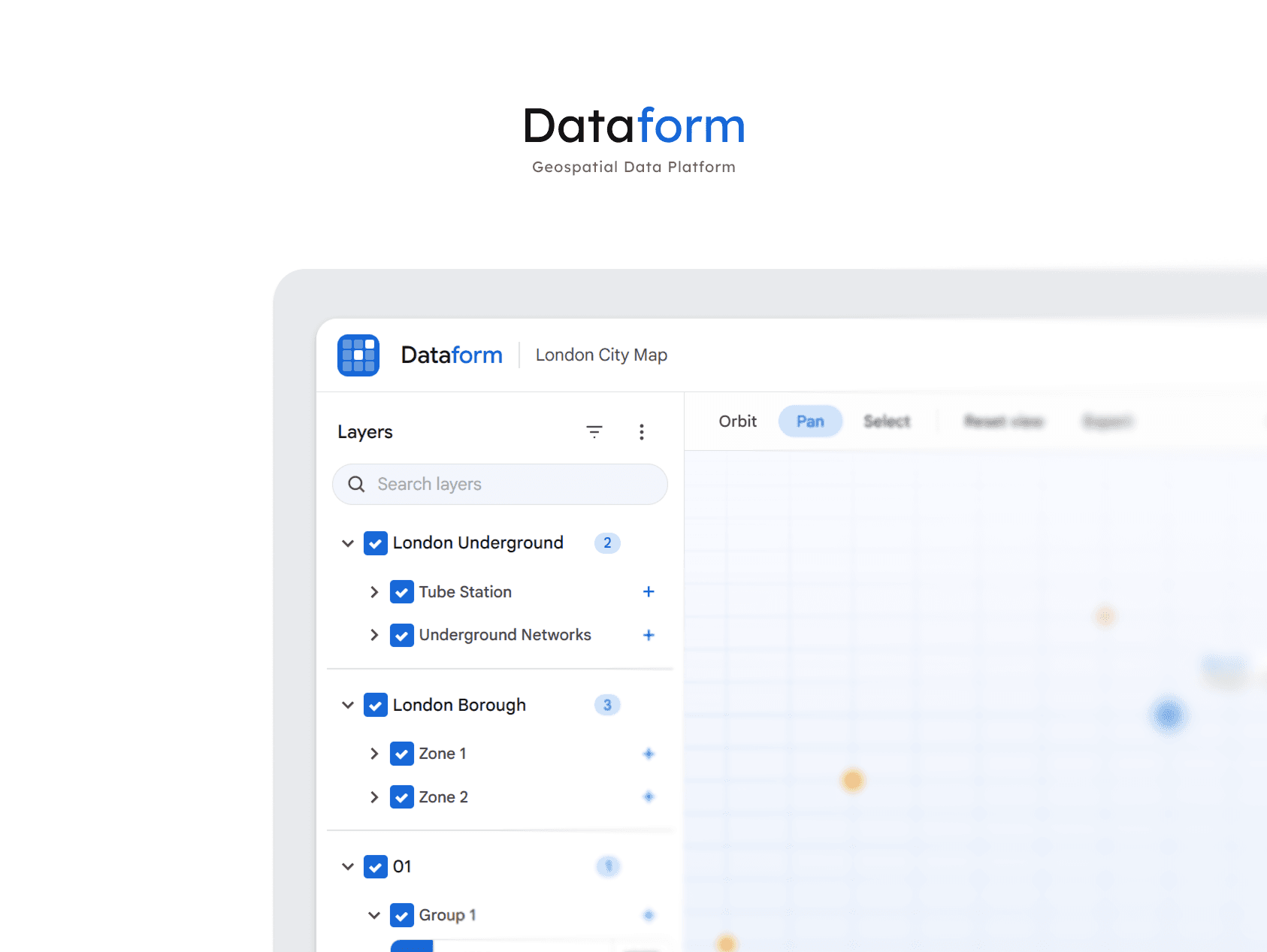
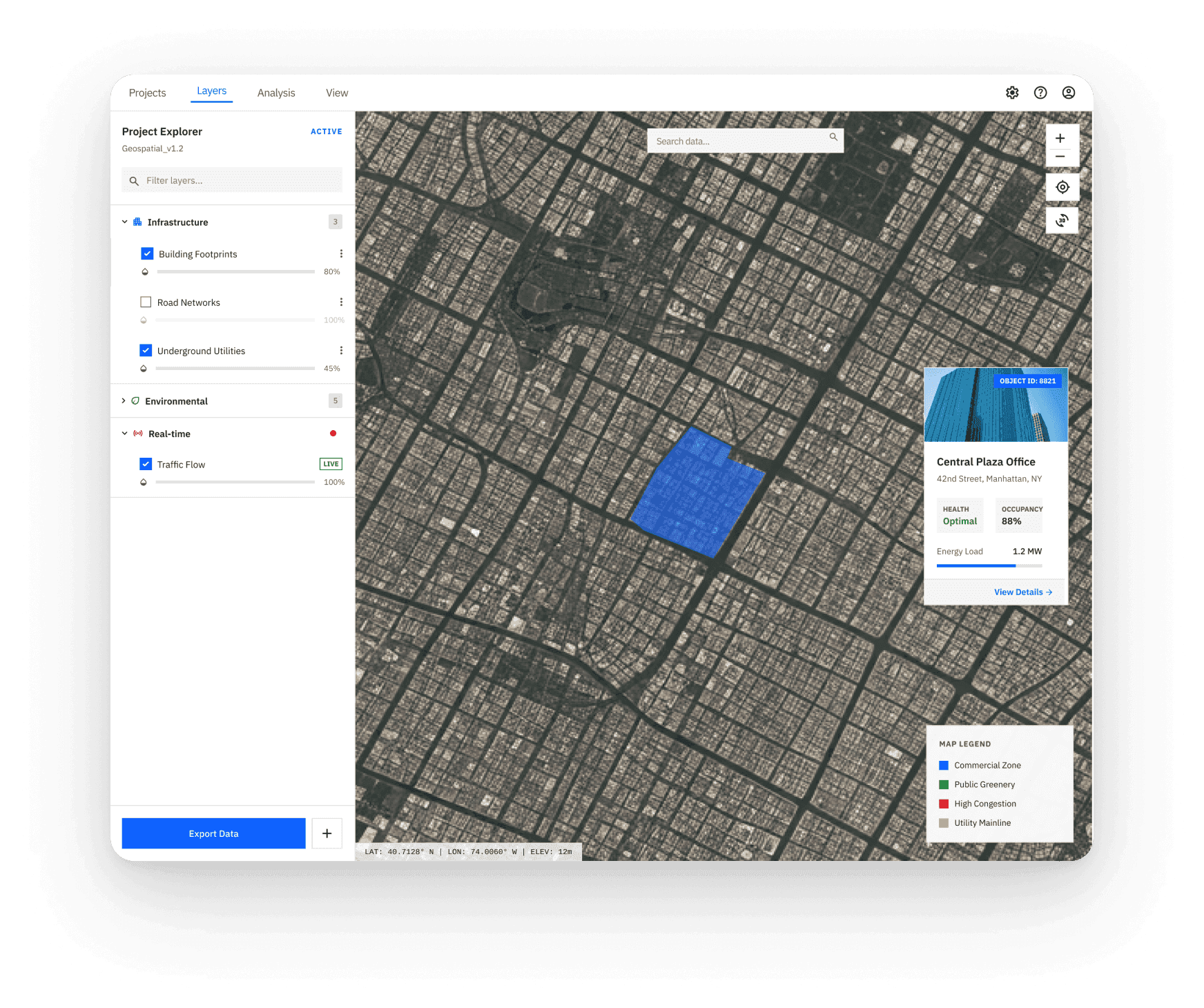
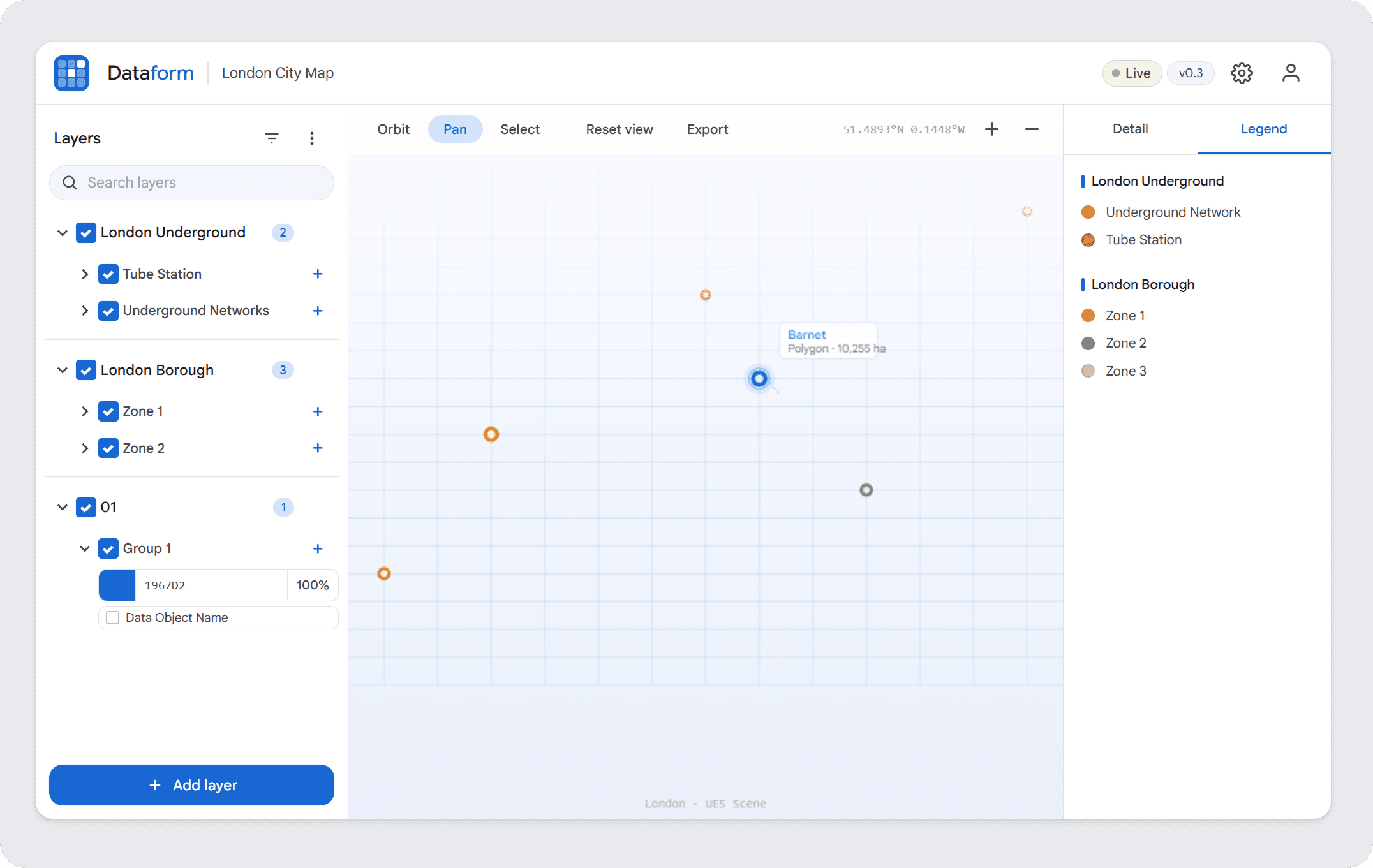
A design-first platform for managing complex geospatial and environmental data systems. Make spatial systems understandable, navigable, and explainable through intelligent interface design.
The story start with designers are pulled into drafting geospatial data, styling lines and points on a screenshot 2D map without any context, the drafted shape data get sucked in figma and become difficult for engineers to implement and maintain.Digital twins are everywhere now, but most of them are dead. Beautiful, static 3D models with no connection to what's actually happening on the ground. Cities and operators were spending millions on visualisation that couldn't tell them anything new. The design challenge wasn't "make the dashboard look good" — it was "what's the structure that turns a passive twin into a live decision surface?"
1. The data hierarchy — Layer → Group → Data Element. A three-tier model that became the spine of the product. Visual style is set at the group level, so an operator can manage thousands of data points with a handful of controls. This one architectural decision shaped the dashboard, the plugin API, and the mental model for every user. I can defend why three levels, not two or four.2. Modular product architecture. Four modules — Visualisation, Analytics, Operations, AI Agent — each licensable independently, each with its own accent colour as a system-level signal. Low-friction entry point (free Visualisation tier), premium capability reserved for clients ready for it. Pricing follows the design, not the other way around.